Health and wellbeing: noise
In the UK over one million people are exposed to aircraft noise above levels recommended for the protection of health

In recent years, the true health impacts of excessive environmental noise on our hearts, sleep cycles and stress levels have been better brought to light by the academic and medical communities. Far from being a problem only for "noise sensitive " people, an increasing body of research indicates that noise affects our health whether we realise it or not.
Stay Grounded: Aviation is a health issue
Aviation Environment Federation: Aircraft noise: a long term problem
Health and wellbeing (and climate change): emissions
Emissions from aviation are growing faster than any other form of transport
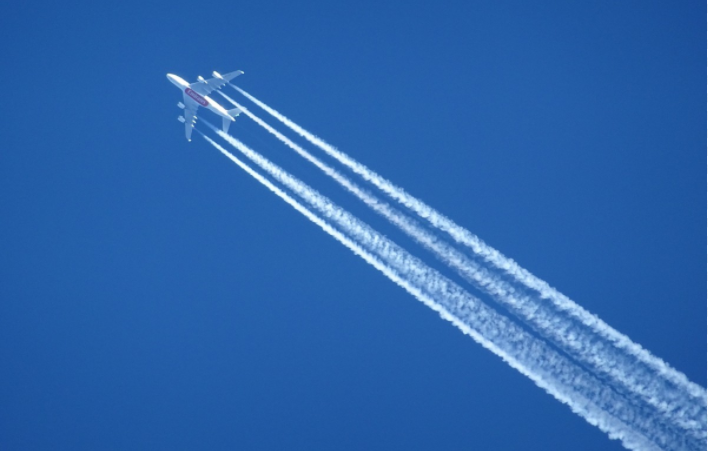
Emissions from aviation are a significant contributor to climate change. Airplanes burn fossil fuel which not only releases CO2 emissions but also has strong warming non-CO2 effects due to nitrogen oxides (NOx), vapour trails and cloud formation triggered by the altitude at which aircraft operate. The climate impact of these non-CO2 effects is comparable to that of aviation’s CO2 emissions.
https://www.transportenvironment.org/topics/planes/airplane-pollution

At lower levels, the emission of ultrafine particles by jet engines is increasingly recognised as one of the main impacts of aviation on human health. Ultrafine particles (UFPs), typically defined as particles with a diameter of 100 nanometres or less, have a proven relation with overall morbidity, various forms of cancer, heart disease, and COPD.
Whereas road transport UFPs are typically concentrated on or near major roads, aviation UFPs are typically spread out over a larger area, including residential areas.
Studies around Amsterdam Schiphol, one of Europe’s largest airports, show effects of aviation UFP emissions on the risks for dementia, high blood pressure and diabetes, as well as indications of effects on a number of other diseases.
See the report below - a dense read!
https://uploads.transportenvironment.org/production/files/CEDelft_Final_Study.pdf